
The ultimate guide to Jean Patou perfumes from vintage classics to modern creations, covering historical periods, boxes, bottles, labels, batch codes, and all the details you need to identify every Jean Patou fragrance.
"....you asked me how to put a date on old Patou perfumes, and I'll teach you it... but you shouldn't care about years and months, because I worked at Patou, and I can assure you: Jean Patou was the best. All bottles produced were pieces of Art. Top quality, the best materials, and the best perfumes. Jean Patou was Art."
Introduction
We never heard about a method for dating vintage Jean Patou perfumes. Actually it is quite a difficult task, because technicians used ingenious tricks to date perfumes, so we have to thank an old French-Italian lady ("Signora Mimma", 83 years old!), once employed at Patou, who revealed the secrets of the batch codes.
This article is divided into 4 parts:
- Batch codes revealed;
- Tutorial pics;
- Glimpses from an interview;
- Miscellaneous pics.
Follow us and learn why "Patou is not about dresses and perfumes; Patou is about Art."
First thing to know:
All Patou perfumes have a big problem: with a few exceptions, there is no batch code written on the bottle, but on the box only. Consequently, you have to rely on boxes. It will be very difficult to date exactly a Patou perfume without its box.
Moreover, Jean Patou is one of the most difficult brands to "decipher", because its batch-code pattern changed at least five times during the years. Usual clues can be misleading: it's quite common to read "Copyright 1985" on the box, while the batch code is 1997!
The main clues
SYMBOLS
- EMB code and estimated sign (stylized "e") on the box: introduced at the end of the 1970s.
- Barcode: since 1990.
- Greendot: since 1992.
ADDRESS
- 1994–2003: "Rue Saint Florentin 7, 5008 Paris".
- 2004–2014: "rue de Castiglione, Paris".
OWNER
- 1984–2002: "@Jean Patou Parfumeur".
- 2002–2012: "P&G Prestige Beauté".
- Since 2012: "SA Designer Parfums".
INGREDIENTS
- Long list of allergens: appear on boxes since 2005.
Jean Patou batch codes
PART 1: THE BATCH CODES REVEALED
(don't mismatch batch codes with "ref. numbers" or "quality control" numbers!)
Between 1950s and 1972:
3-numbers (common) or 4-numbers (rare) batch code (e.g., 694 or 6018).
Between 1972 and 1986:
7 numbers-only batch code (e.g., 8051816).
Between 1986 and 1997:
A 7-digits (mixed letters-and-numbers) batch code, with the famous "inverse" alphabet (example: W009WEB).
Between 1998 and 2001:
A 4-digits (mixed letters and numbers), still using the inverse alphabet (example: N01C).
After 2002:
A 4-numbers-only batch code (Prestige Beauté i.e. Procter&Gamble era), and later "SA Designer Parfums Ltd" era, since 2012 (example: 5175).
Let's go in details
Between 1950s and 1972:
When you see a simple 3-numbers batch code on the corner (most common), the first two numbers indicate the year. Examples:

Here you read 561 in the left corner: it means "year 1956"

You read 584 on the right corner = "year 1958"

You read 694 = "year 1969"

You read 702 here: it means "1970"
When you see 4 numbers (very rare and usually on the back of the label), the first and the last number indicate the year:

Eau de Joy, a very rare batch on the label: 6038.
First and last number, 6 and 8 = year 1968.
Between 1972 and 1986: The 7-numbers batch code
When you see a 7 numbers-only batch code, you must consider the first 4 numbers. The scheme is:
- First number: the decade (7 or 8).
- Second and third numbers: the month (01 to 12).
- Fourth number: the year (0 to 9).
Example: The batch code is 7038782

7 = decade (1970s)
03 = month (March)
8 = year (1978)

So, you have to consider first 4 numbers: 7-03-8 = 1978, March.
-----------------------------------------------
Another example:

Batch code is 8076864...
8 = decade (1980s)
07 = month (July)
6 = year
It means: July 1986.
Between 1986 and 1997: The "inverse" alphabet
All boxes have a 7-digits batch code with mixed numbers and letters. Example:

And now, pay attention...
***You must check the third-to-last letter***

And this letter means:
- Z = 1986
- Y = 1987
- X = 1988
- W = 1989
- V = 1990
- U = 1991
- T = 1992
- S = 1993
- R = 1994
- Q = 1995
- P = 1996
- O = 1997 (it's the letter O, not "zero")
(Remember the inverse order: "Z" bottles are older than "Y"; Y bottles are older than X; X bottles are older than W, etc.)
Between 1998 and 2001: The 4-numbers batch code
Boxes sport a 4-digits-only batch code and the first digit is always a letter. You must consider the first letter (always using the inverse alphabet):
- N = 1998
- M = 1999
- L = 2000
- K = 2001
Example:

Batch N041 = Year 1998 (because letter N is 1998)
NOTE: during these years you could rarely read a few strange batch codes such as "AO001AC" or similar.
Between 2001 and 2012: The "Prestige Beauté / Procter & Gamble" Era
All boxes sport a "P&G Prestige Beautè" label with a 4-numbers batch-code (without letters). During these years, bottles have the batch code printed on the bottom.
- 2xxx = 2002
- 3xxx = 2003
- 4xxx = 2004
- (Note: the long list of ingredients appears on the box from here)
- 5xxx = 2005
- 6xxx = 2006
- 7xxx = 2007
- 8xxx = 2008
- 9xxx = 2009
- 0xxx = 2010
- 1xxx = 2011
- 2xxx = 2012
Example:

Batch 5033 = year 2005
After 2012: "SA Designer Parfums Ltd" Era
You will find "SA Designer Parfums Ltd" on the box and label, using the same 4-numbers batch code style.
PART 2: TUTORIAL PICS
Before 1972
If you see a 3-digits batch code, consider the first two numbers. If you see 4 numbers, the first and the last indicate the year.

694 = year 1969
6038 (4 numbers): first and last (6 and 8) = year 1968
1972-1986: 7-numbers batch codes
Check the first four numbers:
- First: the decade
- Second and third: the month
- Fourth: the year
1972

Batch 7-09-2-xxx = 1972, September
1973

Batch 7-01-3-xxx = 1973, January
1974
 |
| batch 7-04-4-xxx = 1974, april. |
1975
 |
| batch 7-09-5-xxx = 1975, september. |
--------------------------------
1976
 |
| Batch 7-06-6-xxx = 1976, June. |
-------------------------
1977
 |
| batch 7-11-7-xxx = 1977, november |
 |
| batch 7-03-8-xxx = 1978, march. |
---------------
 |
| batch 7-12-9-xxx = 1979, december. |
 |
| batch 7-08-9-xxx = 1978, august. |
 |
| batch 8-10-0-xxx = 1980, october. |
 |
| batch 8-07-0-xxx = 1980, july |
 |
| batch 8-03-0-xxx = 1980, march |
 |
| batch 8-10-1-xxx = 1981, october |
 |
| batch 8-04-1-xxx = 1981, april |
 |
| batch 8-12-2-xxx = 1982, december |
-------------------
 |
| batch 8-07-3-xxx = 1983, july |
 |
| batch 8-04-4-xxx = 1984, april |
 |
| batch 8-05-6-xxx = 1986, may |
 |
| batch 8076864 = 1986, july |
7-digits batch code
with numbers AND letters

Z = 1986


(third-to-last is letter "W")

(third-to-last is letter "V")


1992
(third-to-last is letter "T")

-------------------------------------
1993
(third-to-last is letter "S")

-----------------------
1994
(third-to-last is letter "R")


(third-to-last is letter "P")
 |
| note the copyright 1989 although the perfume dates year 1996! |
(third-to-last is letter "O",
not the zero)


  | ||||
--------------------------- 2000 (4-digits, first letter "L")
--------------------- 2001 (4-digits, first letter "K")
|


 |
| You read "Copyright 1985" with box batched N= year 1998 (13 years later) ! |
STRANGE BATCH CODES...
(between 1997 and 2001)
 |
| These seldom used batchcodes (AO 01AC) appeared between 1997 and 2001. |
 |
| Rare batchcodes used between 1997 and 2001. |
Years 2002-2012:
Prestige Beautè ("Procter&Gamble") Era.
BEFORE:
 |
| This is a typical bottle BEFORE Procter&Gamble (i.e.before 2002) A box with plain golden lines on the borders. and AFTER..... |
 |
| During "Procter&Gamble Era", you will see boxes with crossing lines on corners |
2002-2005 : short list of ingredients
 |
| Prestige Beautè ("Procter&Gamble") label (note the crossing lines on corners) Note the short ingredients list = it's before 2005 |
 |
| Batch 2351 = year 2002 |
--------------------------------------
 |
| Since 2005: Procter&Gamble label, with long list of ingredients (and crossing lines on corners) |

Batch 5164 = year 2005 (note the long list of ingredients)

"Procter & Gamble" Era, batch 5033 = year 2005
Since 2012: "SA Designer Parfums" label

Since 2012: 'SA Designer Parfums' label on box, with crossing lines on borders.
A FEW MORE CLUES?

When you see a reference number in brackets = between 1967 and 1970 (during the 1960s there was a shift in reference numbers).

Reference number in brackets = between 1967 and 1970.

Estimated Sign ("e") on the box? It appeared at the end of the 1970s.

Bar-code on the box appeared in 1990.
Table of Reference Numbers
It could be helpful to identify a perfume by ref. number only.
Old reference numbers (before 1967)
- Joy ref. 2459 = 7 ml
- Joy ref. 459 = 15 ml or 1 oz
- Joy ref. 460 = 30 ml or 1 oz
- Eau de Joy ref. 463 = 30 ml or 1 oz
- Eau de Joy ref. 464 = 45 ml or 1.5 oz
- Joy Eau de Toilette ref. 465 = 90 ml or 3 oz
After 1970
Joy Extrait/Parfum
- ref. 1100 = 30 ml Baccarat Bottle
- ref. 1103 = 7 ml (Flaconnette / black jar)
- ref. 1104 = 15 ml
- ref. 1105 = 30 ml
- ref. 1111 = 6 ml (Le Compagnon)
- ref. 1113 = 10 ml (Vaporisateur Luxe)
- ref. 1115 = 7.5 ml (Vaporisateur)
Eau de Joy (EdP)
- ref. 1203 = 30 ml (Splash)
- ref. 1204 = 45 ml (Splash)
- ref. P1220 = 25 ml (Vaporisateur Rechargeable)
- ref. 1213 = 60 ml (Spray Refillable)
- ref. P1215 = 45 ml (Vaporisateur)
- ref. 1214 = 60 ml (Recharge Spray)
1000 Extrait/Parfum
- ref. 3102 = 7 ml
- ref. 3103 = 7 ml (Flaconnette / green jar)
- ref. 3104 = 15 ml
- ref. 3105 = 30 ml
- ref. 3115 = 7.5 ml
- ref. 3110 = 7.5 ml (Refillable Spray metal case)
Reminder
Joy = Parfum/Extrait
Eau de Joy = Eau de Parfum (1953–1990s)
Joy Eau de Toilette = Launched 1984
1000 = Parfum/Extrait (Launched 1972)
Eau de 1000 = Eau de Parfum (1977–1990s)
1000 Eau de Toilette = Launched 1985
PART 3: Glimpses from an interview
(Please note this interview was translated from French in Italian, then re-translated in English...)

Patou is Art
Jean Patou was not simply "Perfumery": it was "Art". You asked me about batch numbers, but the date of production has really little importance with Patou. All Patou perfumes were realized as pieces of art, without any compromise in quality, and don't need any "date". This is the truth. Every piece was masterfully crafted and is a jewel of its own.
Four Aces in the Sleeve
Patou was the "number one" in perfumery because it had four aces in the sleeve:
- Independent Management: Jean Patou was a relatively small company, headed by nephews and relatives. Being distant from big corporations allowed a few people to take decisions with pride and commitment.
- Complete Control: Patou had its own fields in Provence for roses and jasmines and a private factory at Levallois ("the city of perfumes"). Producing everything "at home" gave an enormous advantage in quality.
- No Compromise: Following Patou's philosophy, haute parfumerie was the best complement for haute couture. We never spared expenses; only the best materials were used.
- The Best Nose: Jean Kerleo was a true genius. Everyone knew in advance that any perfume prepared by him would be a masterpiece.
Only Chanel, Christian Dior, and Guerlain could stay "on par" with us... maybe.
My first Patou
I remember my first impact with a Patou perfume: it was "Amour Amour". I removed the cap and smelled directly from the bottle. Boom! I was completely blown away by the strongest powdery wave ever imaginable, mixed with beautiful flowers. It was divine.
Obsessed with Quality
Why so obsessed? Because quality was our "business card". Patou thought that making the best perfumes in the world would bring visibility. Often, these perfumes were so expensive to produce that they barely made any real gain. Patou was the archetype of the "serious perfumer".
Magnificence and Ruin
It is painful to say, but one of the reasons why Patou failed was its refusal to compromise. It was impossible to maintain such high standards through the years. But this is exactly why I am so fond of Patou: it refused to cheapen products. You could like or dislike them, but there have never been perfumes better than Patou ones, and I think there never will be.
The Biggest Drawback: Fragility
Forget about batch codes and listen to me: the most important thing you should know is the fragility of certain perfumes—specifically the "extraits" or "parfums".
All Patou extraits are easily ruined. We used to say: "Stay away from Heat, Air, and Light." They were sealed by hand using a wet membrane. Once the golden cord and the membrane are removed, the degradation process happens very quickly.
After just two or three years, your extrait is completely ruined! Don't look at the batch codes—look at the integrity instead!
Buying Tips
First and foremost: NEVER buy any vintage Patou extrait/perfume with its cord and membrane removed or damaged. They are almost certainly ruined by exposure to air, light, and heat.
- Sealed bottles without box: Be VERY careful. Light probably ruined the contents (unless you are considering the small black bottles).
- Bottles inside the box: Be suspicious of a "still sealed bottle" that shows significant evaporation. If it’s evaporated, something went wrong.
- Cellophane-sealed boxes: Most likely they are in perfect condition. If you find one, grab it without hesitation: it is a treasure.

NO: The cord and membrane are removed. Buy for collection only, not for perfume.

YES: Cord and membrane are intact.
The Golden Label
Many parfum/extrait bottles sport a label made of genuine gold. You can recognize it because it seems "printed" on the bottle and cannot be peeled off. It is a foil of pure gold applied directly. The same applies to the cap of "Patou pour Homme". Don't throw away your empty bottles!
The Golden Ratio
Louis Sue and Andre Mare created the iconic transparent bottle for "Joy" following the "Golden Ratio" rule (or Divine Proportion), a mathematical rule used in ancient art to achieve aesthetic perfection. The bottle of Joy is a true application of Math in Art.
Worsening of quality in late years?
This question makes me furious! Until Jean Patou was independent (before Procter & Gamble), there was no deterioration in quality. Jean Kerleo was committed to the highest standards year after year. Every batch was checked carefully.
Kerleo retired in 1999, and I would personally buy all Patou scents until that date. The sale to Procter & Gamble in 2001 and the move to the UK is another story entirely.
The Bargain Basket
A few years ago, while on holiday near Portofino, Italy, I walked into a perfume shop and saw a "bargain basket" where the seller had put heavily-discounted perfumes for 10-20 euros. I saw a bottle of Ma Liberté—one of the most carefully-built scents—and I almost fainted. For a moment, I wanted to tell the seller: "Do you have any idea what treasure you've put in that basket?" In the end, I held back.
"Reformulations"? Of course!
That is a strange question, because all perfumes are continuously reformulated. The most sophisticated perfumes (like Joy, 1000, and Sublime) contained such high amounts of natural ingredients that they were reformulated literally batch-to-batch.
Since no two crops of jasmine, rose, or osmanthus are identical, technicians had to "re-orchestrate" the formula constantly. The best reformulation is the one where the customer doesn't notice any change; that was where our technicians spent most of their time.
- Joy: A relatively simple formula composed of 7-8 different roses and jasmines (mainly Rose de Mai and Jasmine de Grasse) plus a "base" prepared by an external lab. It was easy to "re-orchestrate" by varying the amounts.
- 1000: Significantly more complex and difficult to adjust.
Aside from natural variances, we sometimes had to change formulas when certain molecules were banned, such as specific musks during the seventies.
The "One-Off" Scents
Joy and 1000 are true "one-offs" in the world of perfumery. They were so expensive to produce that they barely made any real profit, yet Patou never made any compromises. In an over-crowded market, Joy was the equivalent of a "Ferrari"—it had practically no competitor. It was the ultimate business card for the company: "Joy de Jean Patou, it's simply the best." Unfortunately, that was also its biggest problem: it was impossible to cheapen.
Could You Believe It?
When Patou launched 1000, it was one of the most expensive perfumes in the world. Because high-quality osmanthus was so scarce, Patou bought land in China, grew their own flowers, and even built a factory there. Yes, we had a facility in China to maintain absolute control over the production of our raw materials from beginning to end. That osmanthus was used mainly in 1000 and Sublime.



Miscellaneous

"Flaconnette" / Black Jar, end of 1940s

Bottom of the "Flaconnette", end of 1940s

"Flaconnette" Box, end of 1940s

Joy, label on the bottle, year 1955. Notice the very small "DE" word.

Joy, bottom of the bottle, year 1955

Joy Eau de Toilette, year 1955
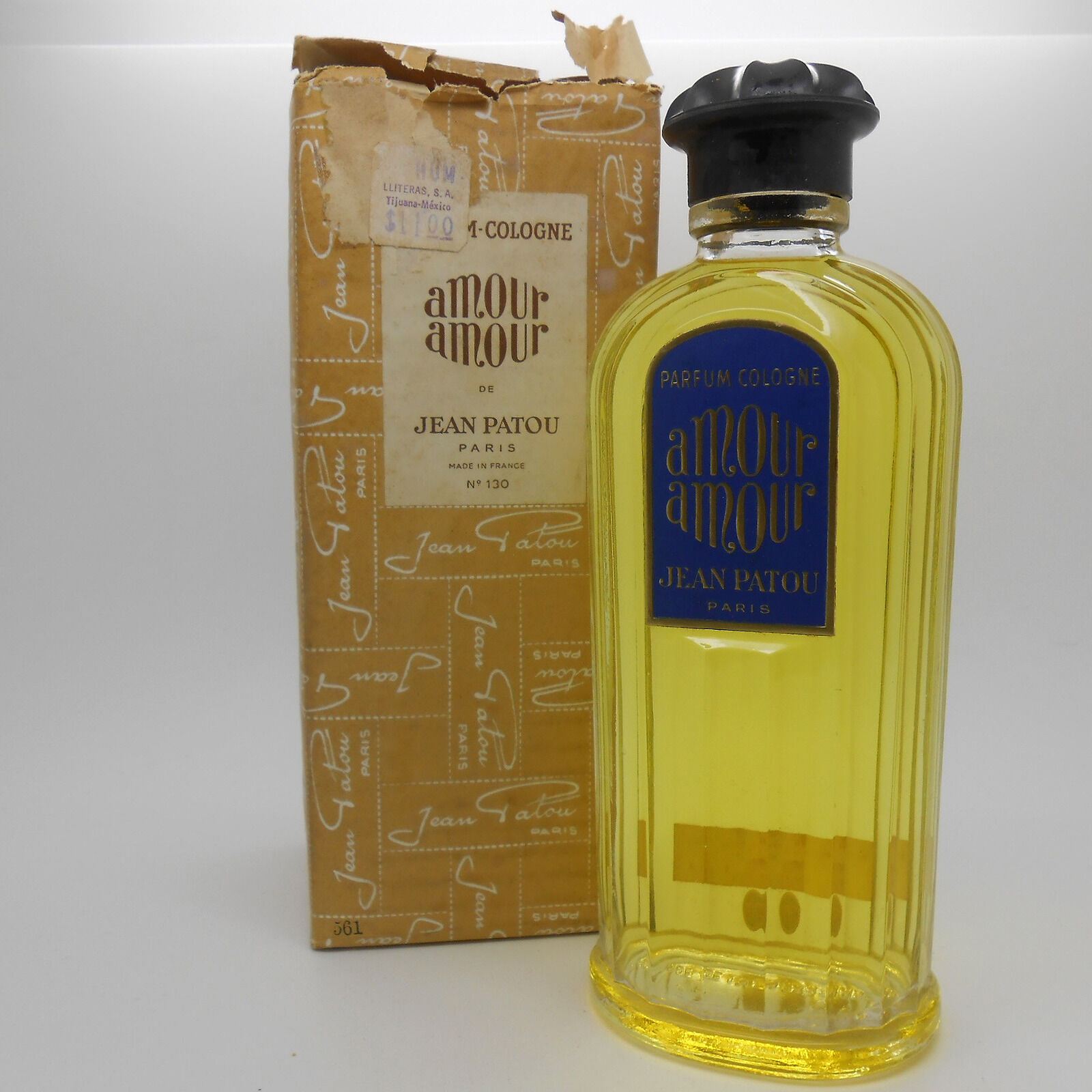 |
| AmourAmour, Parfum Cologne, year 1956 |
 |
| Eau de Joy, 45ml, year 1961: notice the old wrapping paper. |
 |
| Eau de Joy, year 1963 |
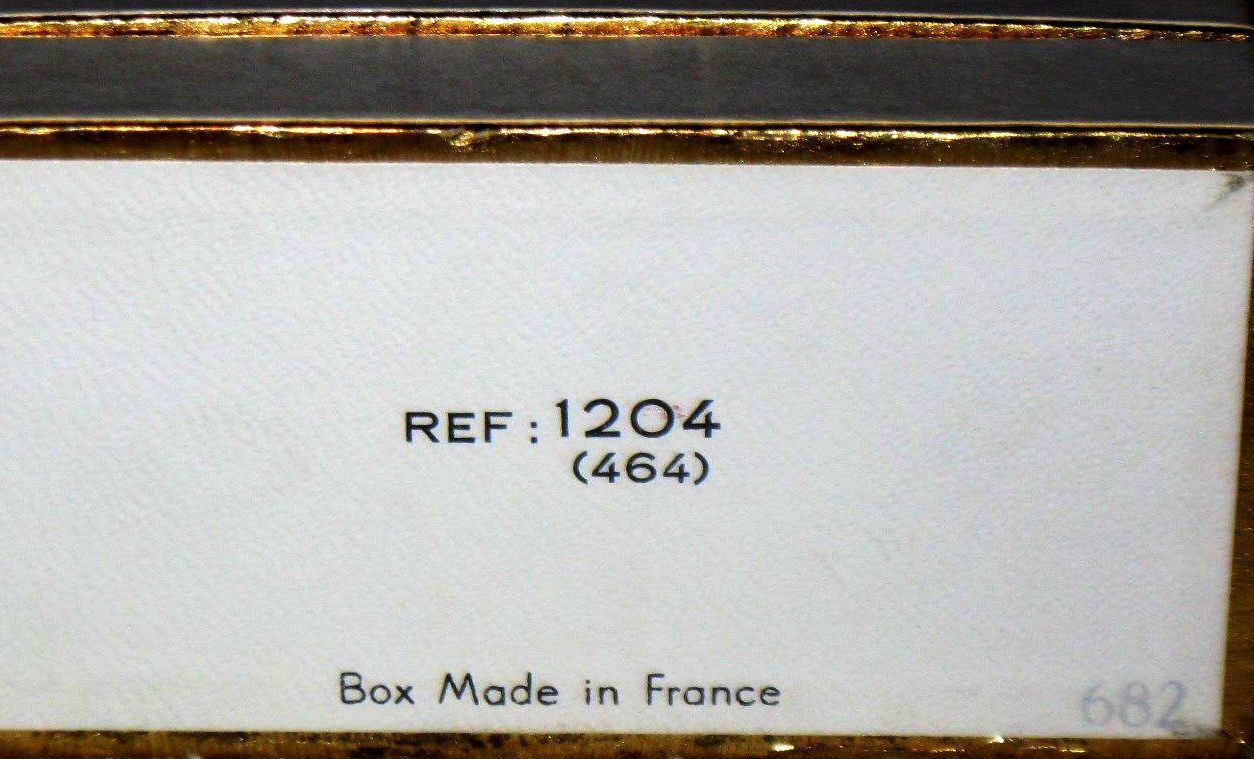 |
| Eau de Joy, box, year 1968: notice ref. numbers with and without brackets |
 |
| Eau de Joy, year 1968: notice the batchcode printed "under the label" |
 |
| "AmourAmour", Parfum-Cologne, year 1969 |
 |
| "Moment Supreme", Eau de Toilette, year 1970 |
 |
| Moment Supreme, Parfum-Cologne, 60ml, year 1971 |
 |
| Moment Supreme, Parfum-Cologne, 60ml, year 1971 |
 |
| "AmourAmour", parfum 7.5ml, batchcode 7065754 ,year 1975 |
 |
| "Eau de Caline", 120 ml / 4 oz. batch code 7053732 (year 1973) |
 |
| Joy "LeCompagnon", 6ml, year 1973 |
 |
| Vapomiseur Spray de Luxe, 10 ml, year 1973 |
 |
| Typical single-boxed "Flaconnette" (black jar), produced from late 1960s until 1975. Notice "Joy Jean Patou" without the word "DE". |
 |
| Joy, 7.5ml, inner and outer boxes, year 1973 |
 |
| Typical "Flaconnette" (Black jar) boxes and bottle, year 1976-1986. Notice "Joy DE Jean Patou" |
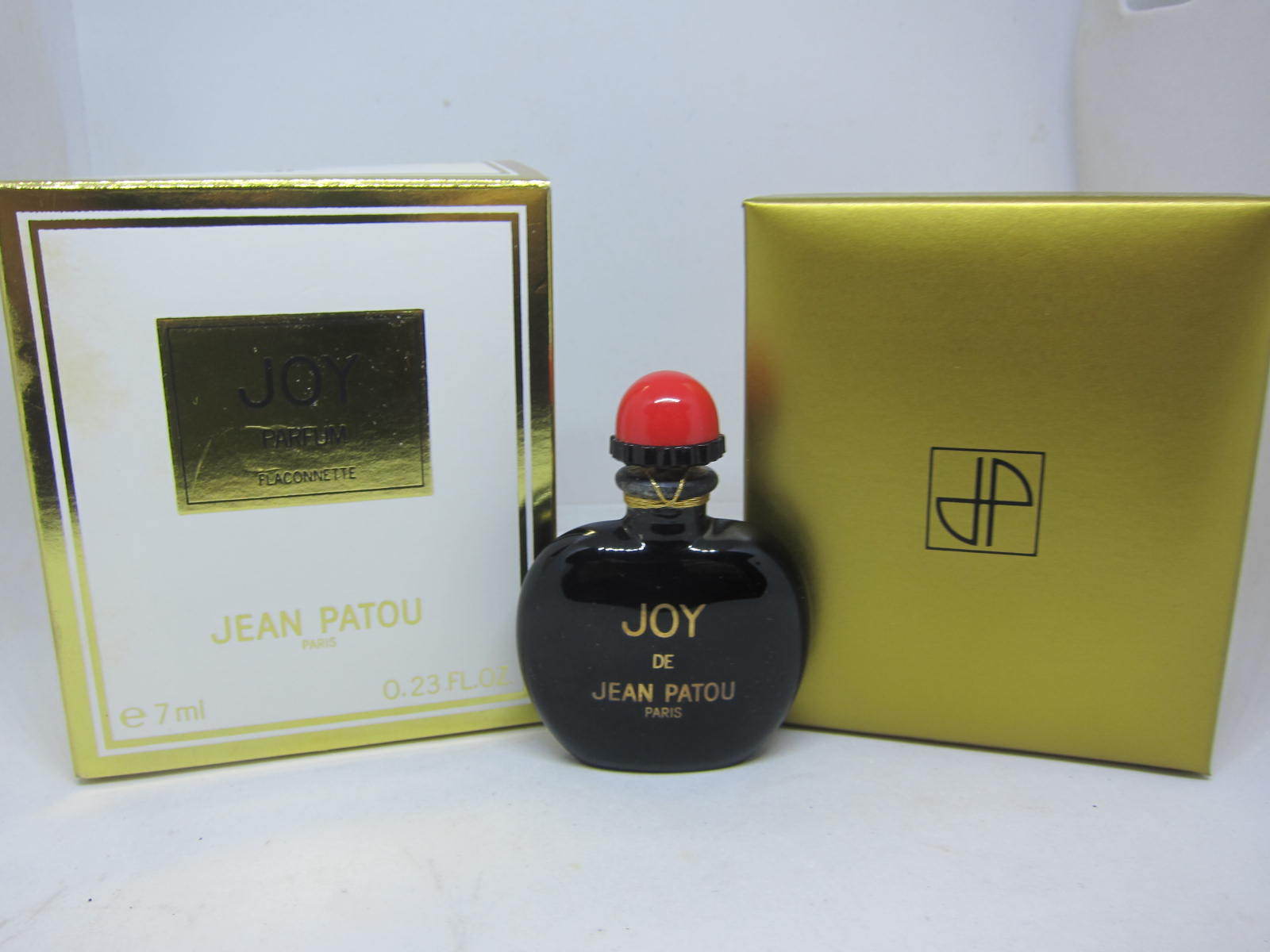 |
| Typical Flaconnette, bottle and boxes, since 1988 notice the thick-borders "golden" box. |
 |
| Typical "Vapomiseur" spray, 7.5 ml, years 1973-1982 |
 |
| Joy, Parfum, 15 ml, year 1975 (JP-embossed box) |
 |
| Joy, Parfum, 15ml, year 1977 |
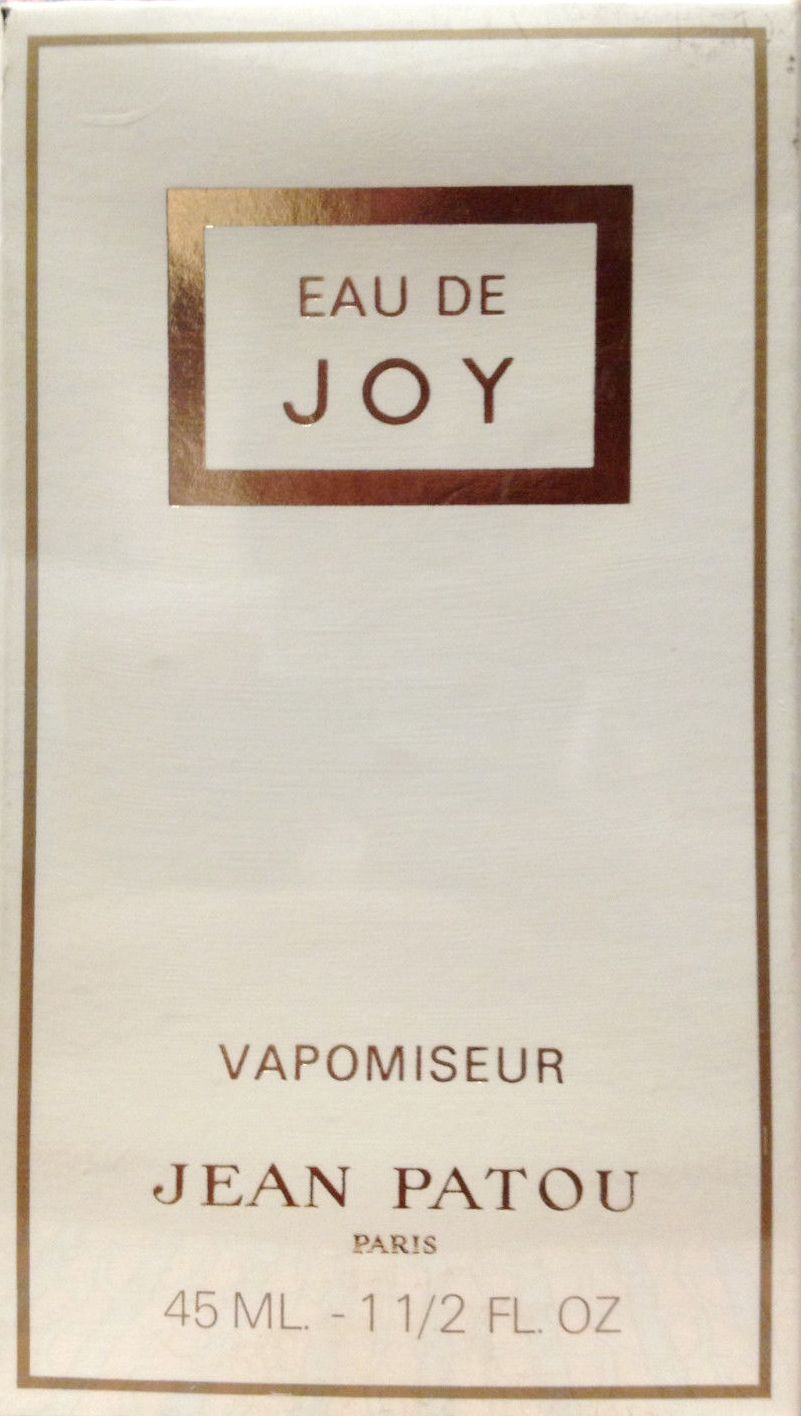 |
| Eau de Joy, Vapomiseur, 45 ml, year 1979 |
 |
| "1000", Parfum, year 1980 |
 |
| "AmourAmour" 120ml/4oz. Parfum Cologne, batch code 8030802 (year 1980) |
 |
| Eau de 1000, Vapomiseur, 60ml. Year 1981 |
 |
| 1000, Parfum, 7.5ml, year 1982 |
 |
| Eau de Joy Vapomiseur, year 1984 |
 |
| "1000", EdT, 30ml, year 1988 |
 |
| "Eau de Joy"/ Eau de Parfum, 60ml / 2 oz spray rechargeable in plastic "flaconnette", year 1991 |
 |
| Joy Eau de Toilette, with "JOY-embossed box", year 1991 |
 |
| Eau de Joy, 30ml, year 1992 |
 |
| "1000", Parfum, 7.5 ml Green Flaconnette, year 1994 |
 |
| Eau de Patou, year 1995 |
 |
| Joy, 30ml, year 1999 |
 |
| Joy, Parfum, Flaconnette, year 2001 |
 |
| "Vacances", Ma Collection Edition, batch code L01A (year 2000) |
 |
| Joy, Parfum, 30ml, modern. |
-------------------------------
Many Thanks to:
-Grace Hummel
-K.Janicki
-Monsieurguerlain
-Andre Moreau
-Kafkaesque
Thank you. This is amazing and much needed
ReplyDeleteThanks a lot. This is PhD level research and much needed.
ReplyDeleteThanks for a great article. It helped me find the dates of my Joy, sealed, from 1967-1970. thanks!
ReplyDeleteThank you for all of the information and lovely reminiscing of Part 3: Glimpses from an Interview.
ReplyDeleteI own a 1/2 fl.oz. 15 ml Joy de Jean Patou Paris, membrane and gold cord beautifully intact. Full bottle, gold printed label.
It's sitting in it's gold box, the back reads "Parfum Joy de Jean Patou Paris", no. 1104 made in France, at the back, bottom right, 694.
Your site couldn't answer one of my questions. The bottom of this bottle reads, "Jean Patou Q Made in France" What does the Q mean? also,
In the box, under the bottle is 1 1/2 inch long white strip of paper printed. "no.de Controle: 2169"
I'm theorizing it validates the box/parfum as 1969
Still, what does the "Q" mean?
Thank you for your work!
Really enjoyed reading this, it has been very helpful. Thanks for sharing!
ReplyDeleteThanks. A great read and very helpful for identifying bottles.
ReplyDeleteInteressantissimo per i tanti dettagli e le foto!!
ReplyDeleteHello: thanks so much for this! I recently acquired a vintage Joy parfum, but can’t find a batch code on the box or bottle. Have you encountered that before?
ReplyDeletethank you for this article!
ReplyDeleteAs always, your research and information is so extensive and comprehensive. I have just purchased my first bottle of joy, clearly dating back to 1990 due to the V symbol and seven Digit batch code. I am so looking forward to testing this amazing gem -Thank you
ReplyDeleteThis is invaluable! The time, thought and effort put into this is much appreciated. Thank you! :) <3
ReplyDeleteTreasure this and "thank you" for it. It is always my go to for Joy questions.
ReplyDeleteRecently
I have seen Patou perfumes in wrapping paper. I would love to know the story on the paper used to wrap for each bottle.
Thanks so much for this wonderful guides. this has been my reference.
ReplyDeleteIs the "onion skin" seal not present in Jean Patou 1000 parfum in 15 ml flacon?
Best wishes
Hi, Are you sure it's a real "parfum"? Usually bottles without "onion skin" are "factices". Enzo
DeleteThis article is a treasure indeed.
ReplyDeleteI enjoyed reading every single word. Thank you so much.
This article is a treasure indeed.
ReplyDeleteI enjoyed reading every single word. Thank you so much.
This article is a treasure indeed.
ReplyDeleteI enjoyed reading every single word. Thank you so much.
Melba, Roberta, Dahlia, Laura,
ReplyDeleteGreetings! I think this article is informative to the max and beautifully written. I just ordered a sealed (cellophane wrapped) box of Joy parfum that can be dated to 1999. I would not have had the willingness to do it without this article. Many of us must deal with online images and potential counterfeit products. Thanks to this article we can have some level of confidence when accessing authentic "old new stock." Your advice and firsthand accounts of working at a Jean Patou facility are especially insightful. Your understanding and respect for Jean Patou also comes through loud and clear. I'm just glad I can still find this parfum because it's glorious.
Absolutely amazing as always, the most informative, in-depth, amazing story. Thank you so much Andre
ReplyDeleteAbsolutely fascinating information and I now understand the importance of the House of Jean Patou. What an utter shame that all these beautiful and iconic fragrances are no longer in production. Sad times.
ReplyDeleteIn 1965 at the age of 15, I remember the 1st time I smelled Joy. My girlfriend and I were in the back seat of her parents’ Rolls Royce going to the Chicago Symphony. When her mother got in the car, there was the most beautiful fragrance of roses; but there were no roses! I quietly pondered this and finally asked “Where are the roses?” Mrs L was wearing Joy!
ReplyDeleteThank you SO MUCH for making this invaluable information available to us perfume-fanatics!
ReplyDeleteThank you. I learned so much.
ReplyDeleteThank you! This was super helpful and helped me determine I have a vintage bottle from 1962!
ReplyDeleteHello, and thank you for this extensive research and knowledge. I have recently been getting into fragrances, especially for the last 12-15 months and especially into Patou fragrances. Some of my favorite fragrances are Lacoste original, polo green, memo paris African leather, Panhaligon's halfeti, tom ford tobacco oud and tom ford black orchid. Some of my favorite Jean Patou fragrances are Joy, ma liberte and sublime, i own small amounts of all of these mainly acquired from antique stores. I also own Jean Patou pour homme in 3 different decants, they all smell identical and i am certain they are real and not fake, however my nose still cannot accept Patou pour homme as the holy grail of men's fragrances, but i am working on it. I recently have an opportunity to get a patou pour homme aftershave new with box for 500 dollars, do you think it is worth it? And how weak is it compared to the regular patou pour homme? Thank you for taking the time to read my comment and reply.
ReplyDeleteGood morning, and thank you for your kind words! Patou represents one of the true pinnacles of global perfumery; indeed, every fragrance released by the historic house (up until 2000) is worthy of serious consideration.
DeleteRegarding your question: the Patou pour Homme Aftershave (distinguishable by its "greenish" juice, as opposed to the amber-yellow of the Eau de Toilette) offers slightly less longevity than the EdT.
That said, my advice is to proceed with the purchase only if the bottle is in pristine condition and you have full confidence in the seller. Regardless, you would be acquiring a highly sought-after piece that will undoubtedly hold its value for future resale. Have a nice day!
I am going to proceed. The guy has a 99.8% positive review and and serial number on the box matches with your information provided in this article. Looks like it is from 1991. I dont see "greenish" from the pictures, but i believe its real. Maybe a slight shade darker than the original amber yellow.
DeleteThank you for getting back to me so quickly
Oh man, this patou pour homme aftershave is definitely worth what i paid. What an excellent juice
Delete