
fully updated on 2026 with new insights*****
A comprehensive guide to Yves Saint Laurent perfumes, from rare vintage fragrances to modern releases, including the history of each period, boxes, bottles, labels, batch codes and expert tips to help you identify genuine YSL perfumes.
Introduction: Opium , Kouros, Paris, Jazz, YSL pour Homme.
Opium, Kouros, Paris, YSL pour Homme, Jazz: the classics of Yves Saint Laurent need no introduction. But if you want to date them, authenticate them, or simply understand what you have in your hands, the labels, stickers, batch codes, and technical symbols on the bottle and box tell the real story.
The challenge with YSL, however, is that the sheer variety of packaging across the decades makes identification genuinely complex.
Labels, codes, and symbols evolved continuously, reflecting the different chapters in the House's long history, and during transitional periods, inconsistencies crept in, with old and new elements appearing side by side in ways that can confuse even experienced collectors.
This is why context matters more than precision. Knowing which historical period a fragrance belongs to is far more meaningful (and far more achievable) than trying to pinpoint whether a bottle was filled in March 1989 or June 1990.
With that in mind, let's untangle the mystery together.
Historical periods of the YSL perfumes.
Yves Saint Laurent perfumes can be divided into five distinct historical periods. Each one reflects a different chapter in the life of the House: changes in ownership, manufacturing, and identity that left clear traces on boxes, bottles, and labels.
This periodization is not merely an academic exercise. The way a box was printed, the font used on a label, or the format of a batch code can tell you more about a fragrance's origins than any other single factor.
For collectors, authenticators, and enthusiasts alike, understanding these five periods is the essential foundation for everything that follows in this guide. Understanding these periods is the foundation of everything that follows.
1 - The Beginning (or "Charles of the Ritz Era"), 1963 to 1986.
2 - The American Years (or "Parfums Corp. Era"), 1986 to 1992.
3 - The French Years (or "SANOFI Era"), from
1993 to 1999.
4 - The "PPR-Gucci Era", from 1999-2007.
5 - The "L'Oreal Era", since 2008.
Summary of the historical Eras.
In 1961, Yves Saint Laurent established his own fashion house, marking the beginning of one of the most influential careers in twentieth-century couture.
Just two years later, in 1963, the American cosmetics firm Charles of the Ritz acquired an 80% stake in YSL, taking over all operations related to cosmetics and fragrance production under the YSL brand name.
The first fragrance to emerge from this partnership was Y, launched in 1964, a clean, elegant composition that set the tone for what was to come.
It was followed in 1971 by two landmark releases: Rive Gauche, a bold floral for the modern woman, and Pour Homme, a sophisticated fougère that would become a benchmark of masculine perfumery.
In 1973, the story shifted again. Squibb, a major American pharmaceutical and consumer goods company, acquired Charles of the Ritz, and with it, control over the YSL fragrance empire.
The first image shows an early YSL box in its most straightforward form. The label reads simply "Made in France, Parfums Yves Saint Laurent", accompanied by the standard restriction prohibiting sale outside authorized retailers.
This presentation remained in use through to the mid-eighties, making it one of the most reliable reference points for dating fragrances from this era.
 |
| YSL perfumes during years 1964-1986 ("Charles of the Ritz" Era) |
In 1986, Yves Saint Laurent made a decisive move: the House reacquired the Charles of the Ritz brand from Squibb for approximately $500 million, reclaiming full control over its perfume and cosmetics division.
It was a costly operation by any measure, but one that proved transformative, reopening vast commercial horizons and granting YSL direct access to the enormous American market.
This chapter in the House's history is known among collectors as the American Years, or the "Parfums Corp." era, a period defined by bold ambition, expanding distribution, and a distinct shift in the aesthetic language of YSL packaging and labeling.
The second image illustrates the packaging introduced during the American Years. The box now bears the label "Yves Saint Laurent Parfums Corp.", a designation that remained in use from 1986 through to 1992–1993.
A notable detail to watch for during this period: bottles were frequently referencing New York, reflecting the House's newly consolidated presence in the American market. These labesl are a reliable and often overlooked dating clue for collectors examining bottles from this era.
 |
| "PARFUMS CORP."1986 1992) without EAN barcode1986-1988 with EAN barcode 1989-1992 |
A note on dating "Parfums Corp." boxes.
Two technical details on the box itself can help narrow down the production date with considerable accuracy.
The EAN barcode, the familiar combination of vertical bars and numerical digits, was almost universally adopted across the perfume industry between 1988 and 1990. The Green Dot recycling symbol followed in 1992, becoming standard in many European countries from that year onward.
These two elements, taken together, provide a practical dating framework for any box bearing the "Parfums" Corp. label:
- No barcode present: the fragrance was most likely produced between 1986 and 1988–1990, predating the industry-wide adoption of EAN coding.
- Barcode present, no Green Dot: production can tentatively be placed between 1989 and 1993, after the barcode became standard but before the Green Dot was introduced.
- Both barcode and Green Dot present: the box almost certainly dates from 1992 or 1993, the final years of the Parfums Corp. era.As always, these are indicators rather than absolutes (transitional periods rarely follow neat boundaries) but in practice they prove remarkably consistent.
A word of caution on transition periods.
Dating a YSL fragrance by its box alone is a reliable starting point: but it is not infallible. Like many large fragrance houses, YSL frequently used existing packaging stock during periods of corporate transition, rather than switching to new materials overnight.
The result is that "new" fragrances were often bottled and sold in "old" boxes, sometimes for months or even years after a label change had officially taken place.
This is particularly relevant for the Parfums Corp. era. It is not uncommon to encounter bottles carrying the Parfums Corp. label well beyond 1993 (the nominal end of that period). The box, in these cases, reflects inventory and logistics as much as it does history.
The practical takeaway: always read the box as one piece of evidence among several, and cross-reference it with the batch code, the bottle design, and any stickers present before drawing conclusions.
The "Sanofi Era", 1993–1999.
The roots of this transition reach back to 1987, when the Wall Street crash sent shockwaves through global markets. Major investors withdrew, leaving YSL in a significantly weakened financial position.
The House divested Charles of the Ritz but retained its cosmetics and fragrance operations, a strategic decision that preserved the core of its identity, even as economic pressures continued to mount through the early years of the decade.
By 1992, the broader economic depression of the early Nineties had taken its toll, and the YSL group was effectively on the market. The buyer emerged in January 1993: the French corporation Sanofi, a move that marked a decisive shift in ownership and brought the fragrance division back under French corporate control.
Collectors refer to this chapter as the Sanofi Era. It is immediately identifiable on packaging: from 1993 onward, the box bears the Sanofi label in place of Parfums Corp., a designation that would remain in use until 1999, when the next chapter in YSL's long history of transitions would begin.
 |
| YSL SANOFI-Era, years 1993-1999 |
The "PPR-Gucci Era", 1999–2008.
In 1999, the Gucci Group acquired the YSL brand, appointing the designer Tom Ford to lead the House in a bold new creative direction. It was a high-profile takeover that brought renewed international visibility to YSL, and with it, another shift in the packaging and labeling of its fragrances.
Three years later, in 2002, Yves Saint Laurent himself retired from fashion, citing deteriorating health. It was the end of an era in the most personal sense. The brand, however, continued under the stewardship of the Gucci Group, with its fragrance and cosmetics lines remaining very much alive and in production.
From 1999 through to 2007–2008, boxes and labels were simplified, dropping corporate designations entirely in favour of the clean, unadorned "Yves Saint Laurent Parfums" inscription.
A useful detail for collectors: from around the year 2000 onward, the address "Neuilly" begins to appear on boxes and labels with considerable consistency, a reliable geographical marker that helps distinguish this era's packaging from that of the Sanofi years immediately preceding it.
 |
| PPR-GUCCI Era. "Yves Saint Laurent PARFUMS" and "Neuilly" label. |
A note on the EU Cosmetics Directive
In 2003, the European Union adopted a revised Directive on cosmetics that introduced, among other regulatory changes, a mandatory requirement to list ingredients in full on product packaging. Member states were required to implement the Directive no later than early 2005.
The practical impact on collectors is significant: from 2004–2005 onward, YSL boxes began carrying the extended ingredients list that is now familiar on virtually all European fragrance packaging.
The presence or absence of this list is therefore a straightforward and highly reliable dating tool: any Gucci-era box without it can confidently be placed before 2004, while those carrying the full ingredient declaration point to 2005 or later.
 |
| LEFT: before 2005, with "short" list of ingredients RIGHT: after 2005, with a "long" list of ingredients |
The L'Oréal Era, 2008 onwards.
In 2008, the YSL fragrance and cosmetics division passed into the hands of L'Oréal, the French multinational that remains one of the most powerful forces in the global beauty industry.
The transition brought with it another subtle but identifiable change in packaging: the word "Parfums" disappeared from the label entirely, leaving simply "Yves Saint Laurent", a cleaner, more streamlined inscription that reflects the corporate aesthetic of the new ownership.
The Neuilly address, established during the Gucci era, carried over and continued to appear on boxes and labels without interruption. One additional detail worth noting for collectors: the acronym B.R.I. began appearing on packaging during this period, denoting the L'Oréal research and development laboratories.
It is a small but telling mark, and once you know what it stands for, it becomes an immediate and unambiguous indicator of post-2008 production.
 |
| L'Oreal Era. since 200 8 until 2011 the word "PARFUMS" disappears, the acronym BRI appears |
The final labeling change worth documenting here occurred in 2011, when the brand name on packaging was updated to "Yves Saint Laurent -YSL Beauté", reflecting L'Oréal's broader repositioning of the house as a unified luxury beauty brand.
At this point, however, we cross the threshold from vintage into the modern era: and that is a story for another guide.
-----------------
You may be interested in a full guide to one of Yves Saint Laurent’s most iconic fragrances: Opium. Released in 1977, it soon established itself as one of the greatest classics of all time.
------------------
The importance of Batch-codes
Beyond the label: reading batch codes,
Labels and packaging tell much of the story, but for precise dating, batch codes are an essential second layer of evidence. Used alongside the label information already covered, they can significantly narrow down the production window of any given bottle.
How to approach the dating process.
Begin by gathering every clue the box and bottle have to offer: the corporate label (Charles of the Ritz, Parfums Corp., Sanofi, PPR-Gucci, L'Oréal, YSL Beautè), the presence or absence of a barcode, the Green Dot, the ingredients list, and any geographical references such as the Neuilly address. Taken together, these elements will place your fragrance within a specific historical period.
Once the era has been established, cross-reference it with the batch code table below. Where possible, knowing the original launch date of the fragrance in question will further sharpen the picture, a bottle cannot predate the year its fragrance was first released, which immediately eliminates a range of otherwise plausible production windows.
With both pieces of information in hand, the label era and the batch code, a confident and well-reasoned date attribution becomes achievable in the vast majority of cases.
BATCH-CODES TABLE
1979- 2012
One final reminder before you begin.
As noted earlier in this guide, packaging inconsistencies are an unavoidable reality when dating YSL fragrances. Old boxes were frequently used for newer productions: it is not unusual, for instance, to encounter eighteenth-era packaging used well into the Nineties.
Treat every clue as a piece of a puzzle, not as a definitive answer in isolation.
Where to find the batch code
The batch code is typically stamped or printed on the bottom of the box and on the bottom of the bottle. On the box, look for a sequence of at least four digits.
On the bottle, the code may run to four or five digits. In some cases the print is faint: good lighting and a magnifying glass are your best allies.
Batch codes: Charles of the Ritz era, 1964–1986
For boxes and bottles carrying the Charles of the Ritz label, the batch code is your primary dating tool within this period. The first digit (or digits) of the code correspond to the year of production according to the following scheme:
1980 = 0xxx
1981 = 1xxx
1982 = 2xxx
1983 = 3xxx
1984 = 4xxx
1985 = 5xxx
BOX "Parfums Corp." type (1986-1993), batch code number starting with:
1986 = 6xxx
1987 = 7xxx
1988 = 8xxx
1989 = 9xxx
1990 = 0xxx (here the barcode appears)
1991 = 1xxx
1992 = 2xxx (here the greendot appears)
1993 = 3xxx
BOX "Sanofi" type (1993-1999), and the batch code starts with:
3xxx = 1993
4xxx = 1994
5xxx = 1995
6xxx = 1996
7xxx = 1997
8xxx = 1998
9xxx = 1999
BOX "PPR-Gucci" type (1999-2008), and the batch code starts with:
0xxx = 2000
1xxx = 2001
2xxx = 2002
3xxx = 2003
Shifting to "1 number+3 letters" batch code
4xxx = 2004 (both codes adopted: you can find 4123 and 4ABC)
5ABC = 2005 (here the "long list of ingredients" on the box appears)
6ABC = 2006
7ABC = 2007
8ABC = 2008
(during transition period between PPR-GUCCI and L'Oreal:in year 2008, there are some inusual batch numbers such as "EA00A", and similar ones.)
BOX "L'Oreal" type (since 2008, with B.R.I. label)
9ABC = 2009
0ABC = 2010
1ABC = 2011 (here "YSL BEAUTE" appears on box)
now shifting to a long batch code:
62 H XXX = 2011
62 J XXX = 2012
62 K XXX = 2013
62 L XXX = 2014
62 M XXX = 2015
62 N XXX = 2016
62 P XXX = 2017
62 R XXX = 2018
One final note: the batch codes on the box and the bottle may differ slightly by one digit. You may find four digits on the box and five on the bottle.
This is not significant, the first four digits are identical in both cases. These are the digits you should rely on for reference.
TUTORIAL PICTURES
 |
| Box "Charles of the Ritz" Era, batch code 9285= year 1979 |
 |
| KOUROS, Charles of the Ritz-type box, batch 20781 = year 1982 |
 |
| (from Ebay) "Charles of the Ritz" label, batch 4312 = year 1984 |
|
| "Charles of the Ritz" Era, batch 6170 = year 1986 |
|
| a typical "Parfums Corp box (1986-1993, and beyond) |
 |
| (from Ebay) Parfums Corp, batch 12941 = year 1991 |
 |
| "Parfums Corp." box plus barcode batch 2337 = year 1992 |
 |
| YSL Champagne, launched in 1993, batch code = 39141 year = 1993 |
 |
| (from Ebay) YSL Champagne, launched in 1993,batch code = 41651, year = 1994 |
 |
| Messing-up box and bottles: a 1995 perfume (batch 5114) packaged in a older box |
 |
| Opium, "Sanofi" box, batch 6274 = year 1996. |
 |
| Sanofi box, batch 7335, year 1997 |
 |
| Live Jazz, launched in 1998, batch 81871, label "Sanofi" = year 1998 |
 |
| YVRESSE/Champagne, batch 8245, Sanofi box, = year 1998. |
 | ||
| batch 9054, Sanofi box. Year 1999
|

 |
| Nu Edt, launched in 2003, batch 30411, word NEUILLY appears = year 2003 |
 |
| Switching from numbers to letters, during year 2004 |
 |
| batch 5KBA = year 2005 |
 |
| year 2005, YSL Parfums, NEUILLY |
 |
| 7KBB = year 2007 |
 |
| 8FAA = year 2008 |
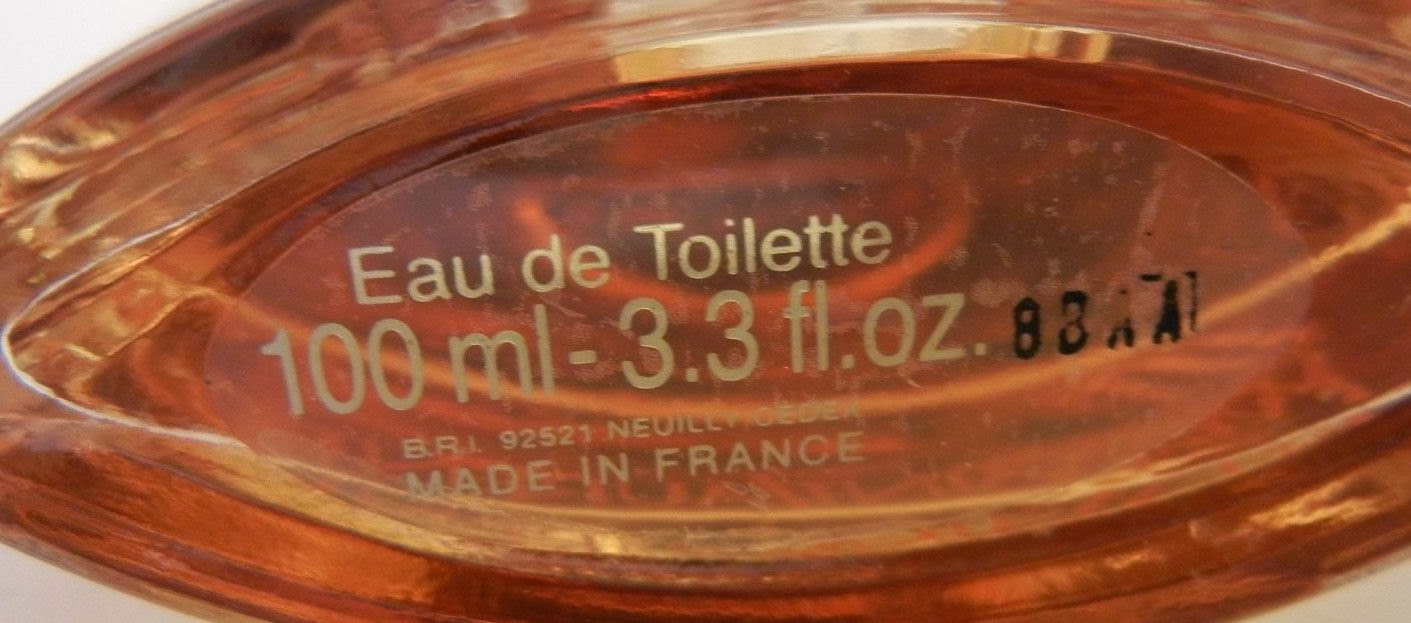 |
| label NEUILLY (since 2000) + BRI (L'Oreal) batch 8BAA = year 2008 |
 |
| label Neuilly = since year 2000 , + BRI (L'Oreal) batch 9BCA = year 2009 |
 |
| L'Oreal type box, without the word "Parfums" |
 |
| switching to new, long batchnumbers (since year 2011) batch 62Jxxx = year 2012 |
 |
| New KOUROS without metallic base: batch 62Hxxx "H" means year 2011 |
-------------------------------------------------------------------------------------------------------------------
 |
| Estimation sign was commonly adopted at the end of the Seventies |
 |
| very rare KOUROS, box Parfum Corp., batch 0290 written inside the box (and not outside) = year 1990 |
 |
| "Parfums Corp." box with Greendot and Barcode, batch D60441 = maybe early year 2006. (it should be a "Sanofi" box) |
Share this article: WHATSAPP TELEGRAM PINTEREST FACEBOOK REDDIT
Share this article: WHATSAPP TELEGRAM PINTEREST FACEBOOK REDDIT
ho trovato un flacone 50 ml splash di kouros ,reca sotto la scatola la scritta sanofi beaute inc ,ma sotto la bottiglia appare parfums corp il batch code lo vedo male sul retro della bottiglia dovrebbe essere 70711 o 20711,potresti aiutarmi
ReplyDeleteinizio 1997 Durante il periodo Sanofi la base metallica ha continuato a mantenere la scritta ParfumCorp.
Deletequindi si tratta di un kouros che sa ancora di kouros ? l'ho provato e lo trovo splendido
ReplyDeletevai tranquillo è per la maggior parte della composizione ancora lui.
DeleteHi, I like to read your blog :) I have a vintage Y splash. Code is S1043. How old it may be? On the bottom only: PARIS 100ml 90% Vol
ReplyDeleteCheckcosmetics doesn't work :(
number "1" could mean 1991 or 2001. Probably it means "year 1991".
DeleteNot 2001, because since 1999-2000 all YSL perfumes are sold in spray bottles.
Hi I am Shirley Chan.
ReplyDeleteI like this post . This is really great.
The fragrance label helps to emphasize that and sells you out uniquely.
I got some Important information on Fragrance label which really helps you.
ciao,
ReplyDeletepotresti aiutarmi a datare un kouros del periodo Parfums Corp. con code 4034.
grazie
sei bravissimo.
stefano
Ciao, è il 1994. Anche se in teoria dovrebbe essere timbrato "Sanofi", hanno continuato ad usare le vecchie scatole fino ad esaurimento. Da qualche parte nel post se ne parla.
Deleteciao
Laura
Hi Andre, great information and fascinating! I have 3 'bottles' (aluminium I think?) of Rive Gauche that I'd like to date but I can't quite work it out.
ReplyDeleteThe 2 x EDT have 7EAA AL and 90112AL on the bottom, and the eau de parfum has 81591 AL. Could you help please?
Many thanks
Dawn
Hi Dawn, here I am :)
Deletethe batch code in the numbers you are reporting is "7EAA".
7EAA means "2007, May".
Hope it helps,
Laura
Hi Andre, GREAT blog and info! I wonder, can you help with this:
ReplyDeleteI have 6 sealed boxes of 50ml EDT, and 1 sealed box of 30ml EDT and I'm fairly sure they are pre-2003 (when Tom Ford apparently reformulated Rive Gauche) but, even though I’ve read your information above, I’m still not quite sure how to tell. I do appreciate that you said you can’t tell for sure from the box, but what do the boxes indicate please, ref the below:-
The 50ml sealed boxes have a bar code 3 365440 246713 and the 30ml sealed box is 3 365440 249738.
The 50ml boxes list the ingredients as below, except some have "2YW01-2" as the final ingredient and others "2YW01-3" as the final ingredient:
ALCOHOL. PARFUM (FRAGRANCE). AQUA (WATER). HEXYL CINNAMAL. HYDROXYISOHEXYL 3-CYCLOHEXENE CARBOXALDEHYDE. HYDROXYCITRONELLAL. ALPHA-METHYL IONONE. COUMARIN. LIMONENE. ETHYLHEXYL METHOXYCINNAMATE. CITRONELLOL. BENZYL BENZOATE. LINALOOL. GERANIOL. BUTYL METHOXYDIBENZOYLMETHANE. CINNAMYL ALCOHOL. BENZYL SALICYLATE. BHT. EVERNIA FURFURACEA EXTRACT. EVERNIA PRUNASTRI EXTRACT. BENZYL ALCOHOL. CITRAL. FARNESOL. AMYL CINNAMAL. ISOEUGENOL. EUGENOL. 2YW01-3. (some have 2YW01-2)
The 30ml box has similar ingredients, but not the same. On the 30ml sealed box they are:
• in a different order
• the word “treemoss” is added : “EVERNIA FURFURACEA TREEMOSS EXTRACT”
• the word “Oakmoss” is added : “EVERNIA PRUNASTRI (OAKMOSS) EXTRACT”
• 3 ingredients not mentioned at all on the 50ml boxes are listed: “ISOEUGENOL, EUGENOL, BENZOPHENONE-2”
• There is no mention of either "2YW01-2" or "2YW01-3"
Do you know please?
Many thanks
Dawn
Hi Dawn, sorry for delay: briefly, the boxes with the long list of ingredients (coumarine limonene etc...) are produced after year 2004-2005, for sure. Check if the boxes report on the bottom side "YSL Parfums" (it's the Gucci Era, so in this case you can date the boxes until years 2007-2008); or "YSL Beautè", in this different case you can date the boxes after year 2008 (l'Oreal Era).
DeleteThe 30 ml boxes is older since it doesn't report the ling list of ingredients. Again check the bottom of the box: "YSL Parfums Corp" (1986-1993), or "YSL Sanofi" (1993-1999), or "YSL Parfums" (1999-2005).
Numbers on the bar code have nothing to do with "batch code".
Check accurately on the box for the batch code, often it is almost invisible, it's printed in black ink, or embossed on the cardboard.
Regards, Laura .
Excellent Information
ReplyDelete(also THANK YOU so much for this info!!!)
ReplyDeleteThank you. I have a bottle of YSL Jazz. The bottle is apparently from the Sanofi era - it is the tall, transparent and rectangular glass version, and it has the Sanofi name on the bottom. The batch code on the bottle is 02661 and there is no information I can find online about it. There is no batch code on the box.
ReplyDeleteCan I be ABSOLUTELY sure that this is a bottle that was produced between 1993-1999?
hi, you have a "year 2000" Jazz, it's most likely a Gucci Era bottle, still sporting the old Sanofi Sticker. Very common with YSL scents. Enzo
DeleteSo I just purchased Opium pour homme gift set from eBay. The box is Gucci era. The cologne and deodorant are sanofi. The batch code on the deodorant says 2006 on check fresh. The batch code on the bottle has had the last number clipped out but it starts with a 0 so it would be 2000?? I’m very confused because the label on the cologne says sanofi
ReplyDeleteHi, yours is a very common problem: usually, when gift sets are made, they use "leftovers" from previous production runs. Therefore, it's perfectly possible that you might find Sanofi perfumes in a Gucci gift set. The batch code starting with 0 and labeled Sanofi is definitely from 2000. And that's a good thing, because you have a bottle that definitely hasn't been reformulated yet; the scent is the original formula one. Congratulations! Enzo
DeleteHi there,
ReplyDeleteI have an old bottle of JAZZ in the black & white piano box which is still sealed. It has the ParfumCorps on the bottom of the box, but the stamped batch code is 6064.
I’m trying to work it out, but wondering if it’s 1996 or fake?
Deletehi, it's probably authentic. YSL is famous for using old boxes for years, even for new editions, so 6064 (if that's the batch code), undoubtedly means 1996. A bottle of unopened vintage Jazz , still sealed, is a great choice for collectors.