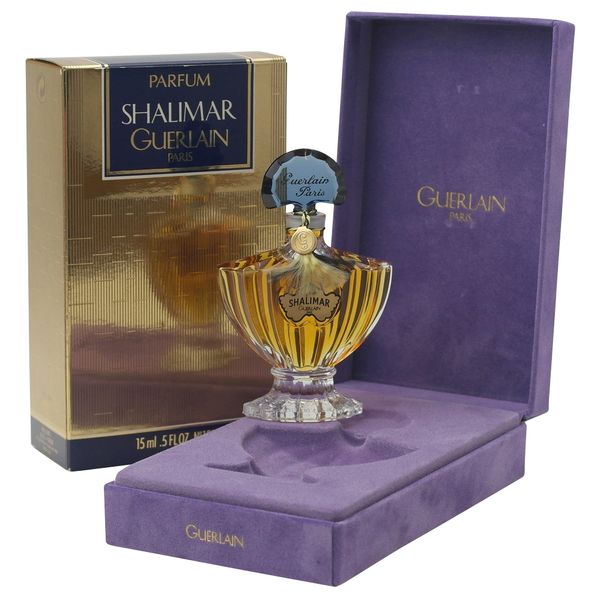
You will probably remember the post about the letter written by the old Guerlain employee. Well, through a mutual friend we sent him a letter with seven more questions concerning the old Guerlain fragrances, and we got the answers.
Keep in mind, before reading: we do not want to break any copyright and, most importantly, everything is based on ancient memories, so there is no evidence of what we are speaking of. You can agree or disagree.
But it is a wonderful and engaging reading....
Enjoy!
Laura
Here are the Seven Questions:
1- Why did the name suddenly change from "Extrait" to "Parfum" on certain old bottles?
2- Can you remember any of "reformulations" occurred in ancient times?
3- What exactly was the old "Parfum de Toilette"?
4- Can you tell us something more about the old "batch-codes"?
5- What can you say about the strange "110ml Eau de Guerlain" bottle?
6- Does a change in the box automatically mean a change in the aroma?
7- What's the difference between 85° and 85%?
And here are the answers.
(please note it was translated from French to Italian, then again to English)
-----------------------------------
1- Why does the name suddenly change from "Extrait" to "Parfum" on certain bottles?
"Hello, this is really a good, good question. Consider the fact I did not work at Guerlain in those years, so I am talking about it from an hearsay by old colleagues. During the second half of the Seventies there was a little-known but very important fact: a complete reformulation of all fragrances. All Guerlain fragrances had to be reformulated due to technical reasons.
The "Extraits" (so called before this reformulation) changed name and became "Parfums" (i.e: "after this reformulation"), while the other two concentrations ("Eau de Toilette" and "Eau de Cologne") maintained their old names.
So this is the answer: when you read "Extrait", it means it's before the Reformulation. When you read "Parfum" instead, it means "after the Reformulation".
Well, before going on, I would like a thing be clear: these Reformulations happened nearly 40 or 45 years ago, and, after so many years, you will hardly smell a difference between the "Before Reformulation" (Extrait) and the "After Reformulation" (Parfum), so there is no reason to hurry and check for ancient bottles, unless you are a bottle collector.
Well, how can you identify other fragrances (EdT and EdC) produced "Before" and "After" this Reformulation?
Here we come: you can check the batchcodes, (all fragrances after 1979 are "reformulated" for sure); otherwise you can use another trick: the alcohol content. Reformulated and non-reformulated fragrances report different alcohol numbers: so you can immediately identify them.
(Please note that you probably will NOT read any alcohol mark on the "Made in USA or Blended in USA" bottles, so this trick is intended only for "Made in France" bottles.)
Here is the scheme for the most common Guerlain fragrances.
Let's consider MITSOUKO for example:
EXTRAIT/PARFUM :
BEFORE reformulation (Extrait) : 85°
AFTER reformulation (Parfum): 83° (or 83%)
EAU de TOILETTE:
BEFORE reformulation : 88°
AFTER reformulation: 86° (or 86%)
EAU de COLOGNE:
BEFORE reformulation: 90°
AFTER reformulation: 88° (or 88%)
A few pics....
 |
| EXTRAIT = before the Reformulation |
 |
| PARFUM = after the reformulation |
 | ||
| Mitsouko Extrait, BEFORE reformulation: 85° (batch SA = year 1977)
|

 |
| Mitsouko Parfum, AFTER reformulation: 83° (batch MK = year 1980) |
 |
During a transition time:
extrait on the bottle, parfum on the box
|
------------------------------------
Eau de Toilette / Eau de Cologne
 |
| Mitsouko EdT AFTER reformulation: 86% |
 |
| Mitsouko Eau de Cologne BEFORE reformulation :90° |
 |
| Mitsouko EdC, AFTER reformulation: 88% (batch JF = year 1983) |
Let's make another example: SHALIMAR.
EXTRAIT or PARFUM
BEFORE reformulation (Extrait) : 70°
AFTER reformulation (Parfum) : 68° (or 68%)
EAU de TOILETTE
BEFORE reformulation: 88°
AFTER reformulation: 87° (or 87%)
EAU de COLOGNE
BEFORE reformulation: 90°
AFTER reformulation: 89° (or 89%)
and so on....
RECAP: all GUERLAIN perfumes underwent a reformulation -due to technical reasons- during the second half of the Seventies.
There is a rather simple and effective way to identify the before/after reformulation: you have to check the "alcohol" number.
EXTRAIT or PARFUM
BEFORE reformulation (Extrait) : 70°
AFTER reformulation (Parfum) : 68° (or 68%)
EAU de TOILETTE
BEFORE reformulation: 88°
AFTER reformulation: 87° (or 87%)
EAU de COLOGNE
BEFORE reformulation: 90°
AFTER reformulation: 89° (or 89%)
RECAP: all GUERLAIN perfumes underwent a reformulation -due to technical reasons- during the second half of the Seventies.
There is a rather simple and effective way to identify the before/after reformulation: you have to check the "alcohol" number.
---------------------------------------
MITSOUKO
MITSOUKO
EXTRAIT or PARFUM :
BEFORE reformulation (Extrait) : 85° - AFTER reformulation (Parfum): 83° (or 83%)
EAU de TOILETTE
BEFORE reformulation : 88° - AFTER reformulation: 86° (or 86%)
BEFORE reformulation (Extrait) : 85° - AFTER reformulation (Parfum): 83° (or 83%)
EAU de TOILETTE
BEFORE reformulation : 88° - AFTER reformulation: 86° (or 86%)
EAU de COLOGNE
BEFORE reformulation: 90° - AFTER reformulation: 88° (or 88%)
---------------------------------------------
SHALIMAR
SHALIMAR
EXTRAIT or PARFUM
BEFORE reformulation (Extrait) : 70° - AFTER reformulation (Parfum) : 68° (or 68%)
BEFORE reformulation (Extrait) : 70° - AFTER reformulation (Parfum) : 68° (or 68%)
EAU de TOILETTE
BEFORE reformulation: 88° - AFTER reformulation: 87° (or 87%)
EAU de COLOGNE
BEFORE reformulation: 90° - AFTER reformulation: 89%
BEFORE reformulation: 88° - AFTER reformulation: 87° (or 87%)
EAU de COLOGNE
BEFORE reformulation: 90° - AFTER reformulation: 89%
--------------------------------------------
L'HEURE BLEUE
L'HEURE BLEUE
EXTRAIT / PARFUM
BEFORE ??? - AFTER reformulation (Parfum) : 83° (or 83%)
BEFORE ??? - AFTER reformulation (Parfum) : 83° (or 83%)
EAU de TOILETTE
BEFORE ??? - AFTER reformulation: 88%
BEFORE ??? - AFTER reformulation: 88%
EAU de COLOGNE
BEFORE reformulation : 90° -AFTER reformulation :89%
BEFORE reformulation : 90° -AFTER reformulation :89%
----------------------------------------
VOL DE NUIT
VOL DE NUIT
EXTRAIT / PARFUM
BEFORE ??? - AFTER reformulation 80%
BEFORE ??? - AFTER reformulation 80%
EAU de TOILETTE
BEFORE ??? - AFTER reformulation: 88° (or 88%)
BEFORE ??? - AFTER reformulation: 88° (or 88%)
EAU de COLOGNE
BEFORE reformulation: 90° - AFTER reformulation: 89° (or 89%)
BEFORE reformulation: 90° - AFTER reformulation: 89° (or 89%)
---------------------------------------
JICKY
JICKY
EXTRAIT / PARFUM
BEFORE ???- AFTER reformulation: 78° (or 78%)
BEFORE ???- AFTER reformulation: 78° (or 78%)
EAU de TOILETTE
BEFORE reformulation: 88° - AFTER reformulation : 86° (or 86%)
BEFORE reformulation: 88° - AFTER reformulation : 86° (or 86%)
EAU de COLOGNE
BEFORE reformulation: 90° - AFTER reformulation: 89° (or 89%)
BEFORE reformulation: 90° - AFTER reformulation: 89° (or 89%)
------------------------------------------
CHAMADE
CHAMADE
EXTRAIT or PARFUM
BEFORE ??? - AFTER reformulation (Parfum) : 76° (or 76%)
EAU de TOILETTEBEFORE ??? - AFTER reformulation (Parfum) : 76° (or 76%)
BEFORE reformulation: 88° - AFTER reformulation 87° (or 87%)
EAU de COLOGNE
BEFORE reformulation: 90° - AFTER reformulation : 89° (or 89%)
------------------------------------------------
CHANT d'AROMES
PARFUM / EXTRAIT
AFTER reformulation : 82° (or 82%)
EAU de TOILETTE:
BEFORE reformulation: 88° - AFTER reformulation: 92° (or 92%),
then reformulated again: 89%
CHANT d'AROMES
PARFUM / EXTRAIT
AFTER reformulation : 82° (or 82%)
EAU de TOILETTE:
BEFORE reformulation: 88° - AFTER reformulation: 92° (or 92%),
then reformulated again: 89%
-----------------------------
APRES l'ONDEE
Parfum
AFTER reformulation: 89%
-----------------------------------------
BEFORE reformulation: ??? - AFTER reformulation: 86°
- and later reformulated again : 92° (or 92%)
---------------------------------------
EAU DE COLOGNE DU COQ
BEFORE reformulation: 90° - AFTER reformulation: 89%
BEFORE reformulation: 90° - AFTER reformulation: 89%
BEFORE reformulation: 90° - AFTER reformulation : 86%
---------------------------
MOUCHOIR DU MONSIEUR
AFTER reformulation: 87%
-----------------------------
VETIVER
Eau de Cologne
AFTER reformulation 88%
After Shave
AFTER reformulation: 51%
------------------------------------------
HABIT ROUGE
Eau de Cologne
AFTER reformulation: 85%
-------------------------------------------------
APRES l'ONDEE
Parfum
AFTER reformulation: 89%
-----------------------------------------
EAU de GUERLAIN
BEFORE reformulation: ??? - AFTER reformulation: 86°
- and later reformulated again : 92° (or 92%)
---------------------------------------
EAU DE COLOGNE DU COQ
BEFORE reformulation: 90° - AFTER reformulation: 89%
-----------------------------------------------
EAU DE COLOGNE IMPERIALE
----------------------------------------------
EAU DE FLEURS DE CEDRAT
---------------------------
MOUCHOIR DU MONSIEUR
AFTER reformulation: 87%
-----------------------------
VETIVER
Eau de Cologne
AFTER reformulation 88%
After Shave
AFTER reformulation: 51%
------------------------------------------
HABIT ROUGE
Eau de Cologne
AFTER reformulation: 85%
----------------------------------------
NAHEMA (launched in 1979, so Extrait doesn't exist)
NAHEMA (launched in 1979, so Extrait doesn't exist)
Parfum : 76°
-------------------------------------------------
2- Can you remember any of "reformulations" occurred in ancient times?
"Well, fragrances are reformulated continuously, and keep in mind that after 40-50 years you probably won't notice any difference anymore comparing two old samples, so I would suggest you not to be obssessed with reformulations.
After many years, sealed, well-preserved, pristine-conditions bottles are more important than "reformulated" or "non-reformulated" ones.
Anyway, back to your question, I can remember other reformulations (it depends fragrance-by-fragrance) occurred in the middle of Nineties, when Guerlain went under LVMH, and just after year 2000. And then again in 2007.
Remember, after 2005 you can detect reformulations simply checking the different formula code written on the box."
--------------------------------
3- What exactly was the old "Parfum de Toilette"?
"Well, this is another good question. Guerlain launched in 1979 an intermediate version between Parfum and Eau de Toilette, and it was called Parfum de Toilette (PdT). PdT was not a simple "dilution" but a different "reorchestration". The first PdT was Nahema (in 1979), followed by other fragrances during the Eighties. Then, starting in 1997, PdT was gradually replaced with the classic denomination "Eau de Parfum" (anyway, I remember Chamade Parfum de Toilette was produced at least until 2002....)
Please note that PdT and EdP were exactly the same juice for quite a few years, before the reformulations occurred.
 |
| Nahema, year 1980, the first "Parfum de Toilette" |
----------------------------------------
4- Can you tell us something more about the old "batch-codes"?
"Well, I read your article about the stickers, and the only thing I vaguely remember is that the old batch-codes were used with numbers in inverse order.
Therefore let's consider the "monochrome" stickers used between 1968 and 1976: the A99 bottle was produced earlier, and it's a more ancient bottle than A1." (see HERE for more details on stickers)
 |
| Batch A99. the higher the number, the more ancient the bottle A99 = approx. 1968 |
 |
| BATCH A16 = lower number evidence a modern bottle Approx mid of Seventies |
-------------------------------------

All these things considered, the "110ml. bottle" was used mainly as a tester in shops (without its cap!) and never converted to a more traditional "natural spray" bottle, until it was discontinued and replaced with the traditional "abeilles" (bees) bottle.
It was almost impossible to find an unused "110ml. bottle" complete with cap and box "for sale", and these became one of the biggest Guerlain rarities. As you say: so bad it's good".
---------------------------
6- Does a different box automatically mean a change/reformulation in the fragrance?
In case of fragrances, and only for this practical purpose, the two nomenclatures are identical, i.e "85°" and "85%" are the same thing."
5- What can you say about the strange "110 ml. Eau de Guerlain" bottle?

"I wonder if you are talking about the famous and ugly spray bottle, in this case again I wasn't there, and I recalled it only by hearsays.
The "110 ml. bottle" was one of the most strange Guerlain bottles, plagued with a lot of problems, and therefore produced very sparingly. When the "Eau de Guerlain" (125ml. classic splash bottle, a marvelous glass sculpture) was launched, for some reasons a rather different, irregularly-shaped glass "spray bottle" was created.
The gas-propellant ("atomizer") mechanism was unfit for this new bottle, so the content was downsized from 125ml. to an unusual 110ml. The result was that the whole bottle missed 15ml. and appeared disturbingly "evaporated" even before first use. Moreover, the strange, long, and very thin cap was very fragile and difficult to put on and remove.
All these things considered, the "110ml. bottle" was used mainly as a tester in shops (without its cap!) and never converted to a more traditional "natural spray" bottle, until it was discontinued and replaced with the traditional "abeilles" (bees) bottle.
It was almost impossible to find an unused "110ml. bottle" complete with cap and box "for sale", and these became one of the biggest Guerlain rarities. As you say: so bad it's good".
---------------------------
"Absolutely NOT; a different box or a different bottle *could* mean a change in fragrance, but not necessarily."
7- What's the difference between 85° and 85% ?
"Well, Guerlain has nothing to do with this question! since it's only the name by which alcoholic degrees are expressed. Percentages (%) are the "Alcohol By Volume" (ABV), while "°" are the old "degrees by Gay Lussac", mainly used in France.
-------------------------------
"Well, Guerlain has nothing to do with this question! since it's only the name by which alcoholic degrees are expressed. Percentages (%) are the "Alcohol By Volume" (ABV), while "°" are the old "degrees by Gay Lussac", mainly used in France.
In case of fragrances, and only for this practical purpose, the two nomenclatures are identical, i.e "85°" and "85%" are the same thing."
--------------------------
If you found this article helpful,
if you feel the information provided by "Raiders of the Lost Scent" has helped you in any way over the years, then we kindly ask you to make a small donation—completely voluntary—to help us. "Raiders of the Lost Scent" is a completely free site, and always will be. Raiders needs the help of its friends to continue to exist!
"Buy us a coffee" or "Donate via Paypal", on the following button:
------------------------
....and...
Batch-codes
Year-of-production,
all-you-need-to-know
about vintage perfumes in the following pages:
-GUERLAIN perfumes ( here )
-YVES SAINT LAURENT perfumes ( here )
-CHRISTIAN DIOR perfumes ( here )
-GIORGIO ARMANI Perfumes ( here )
-VAN CLEEF et ARPELS perfumes ( here )
-CHANEL perfumes ( here )
-BVLGARI perfumes ( here )
-HERMES perfumes ( here )
-VERSACE perfumes ( here )
-GIVENCHY perfumes ( here )
-GUY LAROCHE perfumes (here)
-CACHAREL perfumes ( here )
-ROCHAS perfumes (here)
-GUY LAROCHE perfumes (here)
-CACHAREL perfumes ( here )
-ROCHAS perfumes (here)
-JEAN PATOU perfumes (here)
-LANCOME perfumes (here)
-CARON perfumes (here)
-CALVIN KLEIN perfumes (here)
-RALPH LAUREN perfumes (here)
-JEAN PAUL GAULTIER perfumes (here)
-SERGE LUTENS perfumes (here)
-GUCCI perfumes (here)
Plus:
Kouros by Yves Saint Laurent, visual guide (here)
Fahrenheit by Christian Dior, visual guide (here)
Azzaro pour Homme by Azzaro, visual guide (here)
Drakkar Noir by Guy Laroche, visual guide (here)
Opium by Yves Saint Laurent, visual guide (here)
Samsara by Guerlain, visual guide (here)
and others..
Share this article: WHATSAPP TELEGRAM PINTEREST FACEBOOK REDDIT
Nice post.Keep sharing. Thanks for sharing.
ReplyDeleteExcelente! Bravo
ReplyDeleteTHANK YOU FOR ALL THIS INFORMATION!!! IS REALLY USEFUL AND I APPRECIATE ALL YOUR EFFORT AND TIME INVESTIMENT. THANKS A LOT
ReplyDeleteThis is wonderful! I truly appreciate the information and this makes things clearer for me in future. Thank you!
ReplyDelete